
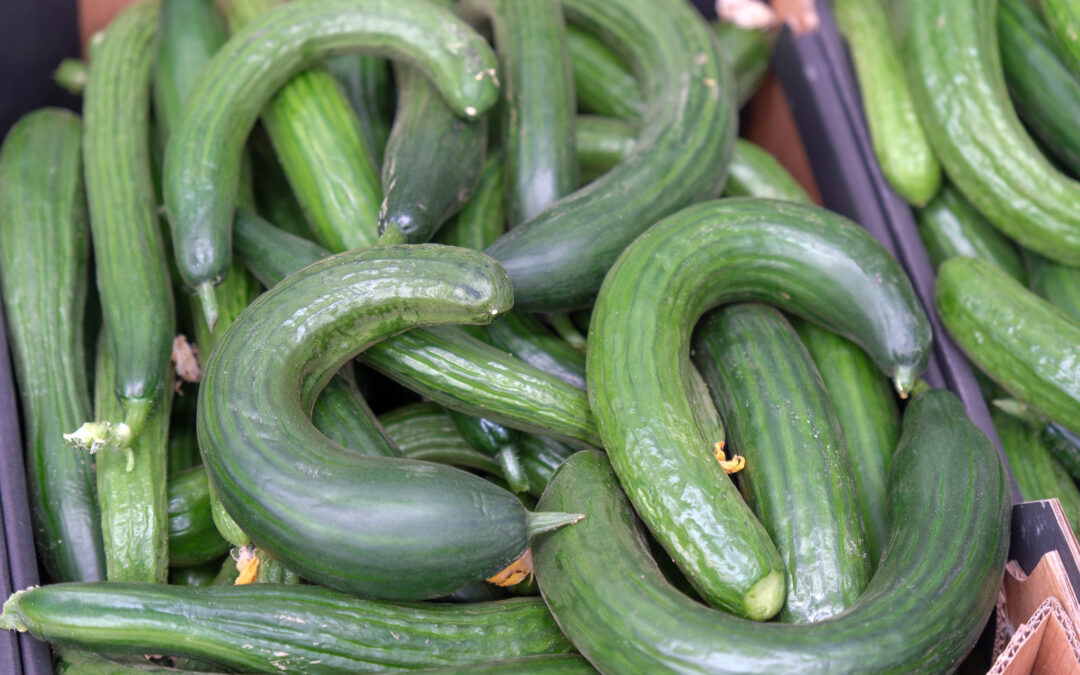
Across the UK, 2.9 million tonnes of edible food is wasted on farms every year. That’s the equivalent of 6.9 billion meals, lost not because the food is unsafe or poor quality, but because it doesn’t meet supermarket size and shape specifications.
Leon Aarts, co-founder of Ample, sees it every day. Cucumbers that are slightly bent, courgettes that grew a little too large. Perfectly good vegetables that get graded out and have nowhere to go. Without a route into the food system, they end up in landfill.
That felt wrong to us. So we decided to do something about it.
The partnership
We’ve been working with two organisations to build a practical solution: Ample, who rescue farm gate surplus, and StreetBox, who redirect good food to where it can be used.
As our Chief Executive Michael Hales puts it: “At Juniper, we believe good food should be valued from field to fork. This partnership is about challenging the idea that vegetables need to look a certain way to taste great. If produce is fresh, safe and full of flavour, it has a place in our kitchens.”
Each partner plays a specific role. Together, they make something work that most of the food industry leaves unresolved.
Getting the food into schools
Ample works to find meaningful routes for farm gate surplus that would otherwise never leave the farm gate. As Leon Aarts puts it: “Too much good food never gets the chance to be eaten because of the way our food system is designed. These vegetables have been grown with the same care as any other crop.”
StreetBox bridges the gap between the farm and the school kitchen. They collect the produce, pack it for school use, and make sure it gets to where it can be used. As Chris Steele-Kendrick, Director at StreetBox, says: “This partnership shows what can happen when organisations work together across the food system, from farms through to school kitchens, to make sure perfectly good produce reaches places where it can be used and enjoyed.”
The result is that fruit and vegetables which would have gone to waste are now being served as part of a hot school lunch. That’s a straightforward win.
Closing the loop on plate waste
Putting food on a plate is one thing. Making sure children actually eat it is another.
DigiTally is a digital feedback tool that captures data on what children are choosing and how much is being left on the plate. That information feeds back into how menus are planned and portions are sized, helping to reduce what gets thrown away at the end of a meal. It’s a practical way to connect what’s being served with what’s actually being eaten.
Why it matters
Schools serve hundreds of meals every day. That’s a real opportunity to do things differently: to use good ingredients that might otherwise be discarded, to reduce waste in the dining room, and to help children understand where food comes from and why it matters.
This partnership is one example of what that looks like in practice. It’s not complicated. It’s a few organisations working together, doing the everyday things properly.
We’ll keep building on it.
UK farm food waste figures from the WWF Hidden Waste Report (2022).